Hydrostripping for DOTs: Reusing Aluminum Traffic Signs Instead of Scrapping Them
How Northwest Sign Recycling Helps DOTs Nationwide Extend the Life of Aluminum Traffic Signs
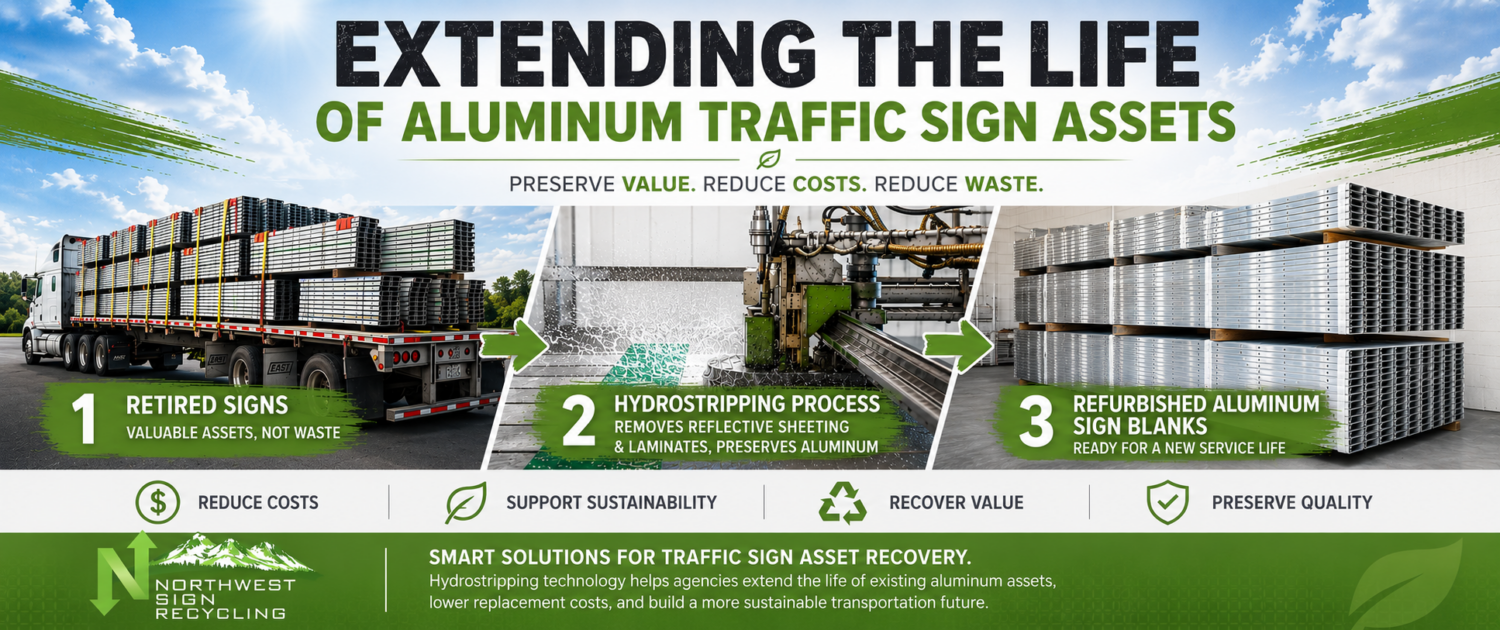
Northwest Sign Recycling helps Departments of Transportation across the United States cut traffic sign replacement costs with hydrostripping technology. We remove old reflective sheeting and laminates, protect the aluminum underneath, and turn retired signs into refurbished sign blanks ready for new use.
Today, DOTs must keep roads safe, manage costs, and meet sustainability goals. At the same time, they handle large sign inventories that require regular updates due to road changes, new rules, worn sheeting, and other infrastructure work.
In many programs, agencies sell retired traffic signs as scrap or send them into standard recycling before buying new aluminum blanks. However, many of those signs still contain sound aluminum that hydrostripping can recover, refurbish, and return to service.
So, for DOTs seeking a smarter, more cost-effective sign recovery strategy, hydrostripping offers a practical option.
For DOTs, counties, and public works agencies, that means a worn sign does not have to become scrap. Instead, agencies can recover sound aluminum panels, refurbish them, and apply new reflective sheeting.
As a result, agencies gain a more practical way to manage sign inventories, control budgets, reuse materials, and plan ahead.
What Is Hydrostripping?
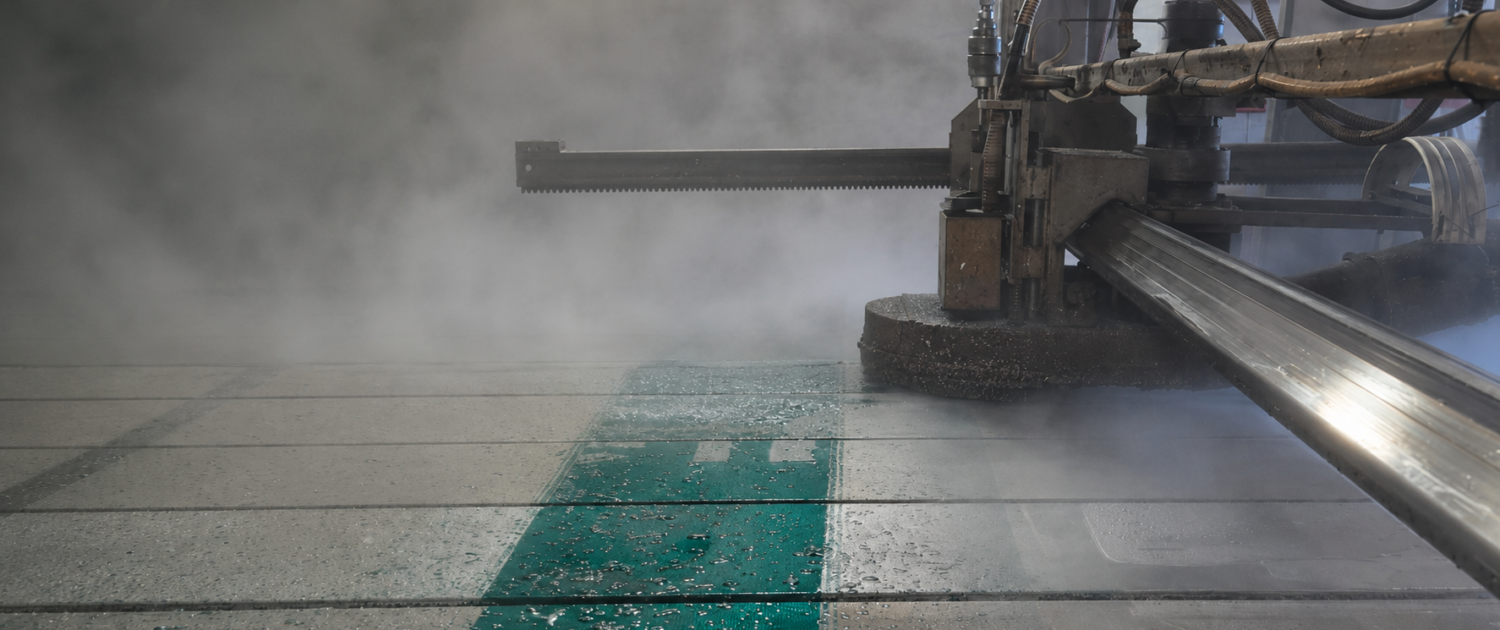
Hydrostripping is a refurbishment process that removes reflective sheeting and laminates from retired traffic signs while keeping the aluminum panel intact.
Unlike standard recycling, hydrostripping does not melt the aluminum down. Instead, it preserves the sign blank so crews can restore it and put it back into service.
The process turns retired signs into refurbished sign blanks that are ready for new reflective sheeting and future roadway use.
As a result, agencies recover more value from existing assets and rely less on newly made aluminum.
Why DOTs Are Looking Beyond Traditional Sign Replacement
Traffic sign replacement represents a significant ongoing expense for transportation agencies.
As aluminum prices shift and budgets tighten, many DOTs look for ways to extend asset life without giving up safety or performance.
In many cases, agencies retire signs because the reflective sheeting wears out, not because the aluminum panel fails.
By restoring the original substrate rather than replacing it entirely, agencies can:
- Reduce sign replacement costs
- Extend the life of existing aluminum assets
- Improve budget efficiency
- Reduce procurement costs
- Support sustainability initiatives
- Minimize landfill waste
- Decrease demand for newly manufactured aluminum
Because of that, agencies can get more value from materials they already own.
Refurbishment vs. Traditional Recycling
When aluminum traffic signs enter standard recycling, crews usually melt the material down and process it into new products.
Although recycling keeps aluminum out of landfills, it still uses significant energy and resources to make a new sign blank.
Hydrostripping takes a different path.
Instead of breaking the sign down to raw material, the process keeps the original aluminum substrate and prepares it for another service cycle.
For many transportation agencies, refurbishment represents the highest-value use of retired sign materials because it:
- Preserves existing assets
- Reduces manufacturing demand
- Lowers replacement costs
- Extends material life cycles
- Delivers measurable sustainability benefits
So, rather than treating retired signs as scrap, agencies can treat them as useful assets with real remaining value.
Reducing Costs Through Asset Recovery
Transportation agencies now manage more roadway assets with tighter budgets and greater accountability.
Refurbished aluminum sign blanks help agencies control material costs. As a result, they do not have to buy newly made panels for every project.
For DOTs that manage thousands of signs, those savings can add up quickly.
Hydrostripping helps agencies stretch maintenance budgets while they keep roads safe and compliant.
Therefore, agencies can protect budgets without lowering standards.
Supporting Sustainability Goals Without Compromising Performance
Today, public infrastructure plans often focus on sustainability and waste reduction.
When agencies refurbish existing sign blanks, they keep usable material in circulation and rely less on new manufacturing.
Benefits include:
- Reduced landfill waste
- Conservation of natural resources
- Lower energy consumption compared to producing new aluminum
- Reduced environmental impact from manufacturing
- Support for circular economy initiatives
- Improved sustainability reporting opportunities
Because of that, hydrostripping works well for agencies that want clear environmental gains without giving up performance.
A Chemical-Free Process That Preserves the Aluminum Substrate
Northwest Sign Recycling uses a chemical-free hydrostripping process to remove reflective sheeting and laminates while protecting the aluminum underneath.
We keep the original panel intact because that step drives the value of the process.
As a result, agencies can extend the life of existing sign inventories instead of destroying usable material.
Scalable Solutions for Transportation Agencies
Whether an agency manages a city sign program or a statewide network, it needs a solution that can scale.
Northwest Sign Recycling processes a wide range of traffic sign types, including:
- Regulatory signs
- Warning signs
- Guide signs
- Highway signs
- Street name signs
- Construction and work-zone signs
Our refurbishment process fits into current maintenance and replacement programs without disrupting daily operations.
Why DOTs Partner With Northwest Sign Recycling
Northwest Sign Recycling helps transportation agencies recover more value from retired traffic signs. Our hydrostripping process keeps sound aluminum in use and returns it as refurbished sign blanks that can go back into service.
Our approach helps agencies:
- Reduce sign replacement costs
- Extend the life of aluminum sign inventories
- Recover value from retired assets
- Reduce waste
- Support sustainability goals
- Improve resource stewardship
- Reduce dependence on new aluminum production
In addition, we support DOTs, counties, municipalities, and public works agencies across the United States with practical programs that reduce waste and avoid unnecessary replacement spending.
The Future of Traffic Sign Asset Management
As agencies rethink long-term infrastructure costs and environmental goals, asset recovery is becoming a more important part of sign program planning.
Hydrostripping offers a smarter option than a replace-and-discard model because it preserves valuable aluminum assets and prepares them for a new service cycle.
So, agencies can lower waste, improve material stewardship, and gain more value from existing sign inventories.
Frequently Asked Questions
What is hydrostripping for traffic signs?
Hydrostripping removes old reflective sheeting and laminates from retired traffic signs while keeping the aluminum underneath so the sign blank can be reused.
Can aluminum traffic signs be reused?
Yes. Many retired aluminum signs still have sound panels after the reflective sheeting wears out, so they work well for refurbishment.
How does hydrostripping help DOTs reduce costs?
Hydrostripping helps DOTs reuse existing sign blanks, buy fewer new panels, and get more value from current assets.
Does Northwest Sign Recycling work with agencies across the United States?
Yes. Northwest Sign Recycling works with DOTs, counties, municipalities, and public works agencies nationwide.
If your Department of Transportation wants a more efficient way to cut replacement costs and extend the life of aluminum sign assets, Northwest Sign Recycling can help.
Talk with our team to learn how hydrostripping can turn retired traffic signs into refurbished sign blanks for their next service cycle.